


Εξοπλισμός Βαθιάς κατάδυσης
Columnist: George Petrou
Photo: George Petrou, Greek Diver Archive
Warning: No article contains sufficient information to replace the work of the Instructor and the school manuals that will make you capable of performing deep dives.
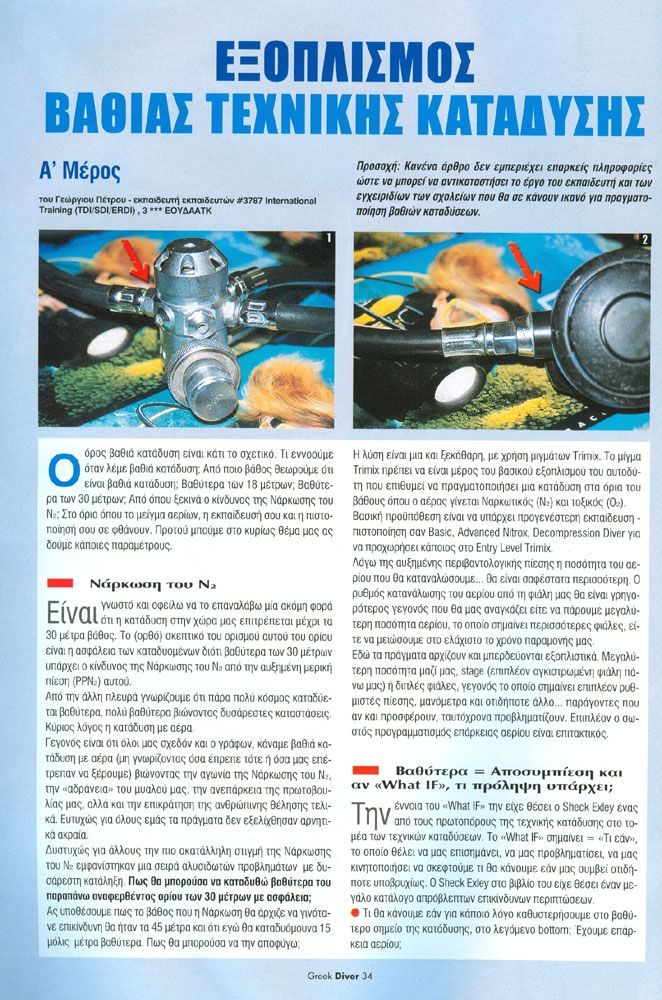
The term deep diving is a relative term. What do we mean when we say deep diving? At what depth do we consider it to be deep diving?
• Deeper than 18 meters?
• Deeper than 30 meters, where the risk of N2 Narcosis begins?
• Στο όριο όπου το μείγμα αερίων, η εκπαίδευσή σου και η πιστοποίησή σου σε φθάνουν...
Before we get into our main topic, let's look at some parameters.
N2 Narcosis
It is known and I must repeat it once again that diving in our country is allowed up to 30 meters deep. The (correct) rationale for defining this limit is the safety of divers because deeper than 30 meters there is a risk of N2 Narcosis from the increased partial pressure (PPN2) of it. On the other hand, we know that too many people dive deeper, much deeper, experiencing unpleasant situations.
Κύριος λόγος η κατάδυση με αέρα
Γεγονός είναι ότι όλοι μας σχεδόν, και ο γράφων, κάναμε βαθιά κατάδυση με αέρα (μη γνωρίζοντας όσα έπρεπε τότε ή όσα μας επέτρεπαν να ξέρουμε) βιώνοντας την αγωνία της Νάρκωσης του Ν2, την "αδράνεια" του μυαλού μας, την ανεπάρκεια της πρωτοβουλίας μας, αλλά και την επικράτηση της ανθρώπινης θέλησης τελικά. Ευτυχώς για όλους εμάς τα πράγματα δεν εξελίχθησαν αρνητικά, ακραία.
Δυστυχώς για άλλους την πιο ακατάλληλη στιγμή της Νάρκωσης του Ν2 εμφανίστηκαν μια σειρά αλυσιδωτών προβλημάτων με δυσάρεστη κατάληξη. Πως θα μπορούσα να καταδυθώ βαθύτερα του παραπάνω αναφερθέντος ορίου των 30 μέτρων με ασφάλεια?
Ας υποθέσουμε πως το βάθος που η Νάρκωση θα άρχιζε να γινότανε επικίνδυνη θα ήταν τα 45 μέτρα, και ότι εγώ θα καταδυόμουνα 15 μόλις μέτρα βαθύτερα πως θα μπορούσα να αποφύγω αυτήν?
Answer:
The solution is clear and simple, using Trimix mixtures. The Trimix mixture should be part of the basic equipment of the scuba diver who wishes to dive to the limits of depth where the air becomes Narcotic (N2), and toxic (O2). The basic requirement is to have previous training - certification as Basic, Advanced Nitrox, Decompression Diver in order to proceed to Entry Level Trimix.
Due to increased environmental pressure, the amount of gas we will consume...
θα είναι σαφέστατα περισσότερη. Ο ρυθμός κατανάλωσης του αερίου από την φιάλη μας θα είναι γρηγορότερος γεγονός που θα μας αναγκάζει είτε:
• Get more gas, which means more bottles
• To reduce our time of stay to a minimum.
Answer:
This is where things start to get confusing in terms of equipment, a larger quantity with us, a stage (an additional bottle hooked on us), or double bottles, which means additional pressure regulators, pressure gauges and everything else...factors that, although they offer benefits, are also problematic. Furthermore, proper gas adequacy planning is imperative.
Deeper = Decompression and "What IF"... what prevention is there?
The concept of "What IF" was put forward by Sheck Exley, one of the pioneers of Technical Diving in the field of Technical Diving. "What IF" means = "What if", which wants to point out to us, to concern us, to motivate us to think... what we will do if anything happens to us underwater. Sheck Exley in his book had put forward a large list of unforeseen dangerous situations. What will we do if they happen?
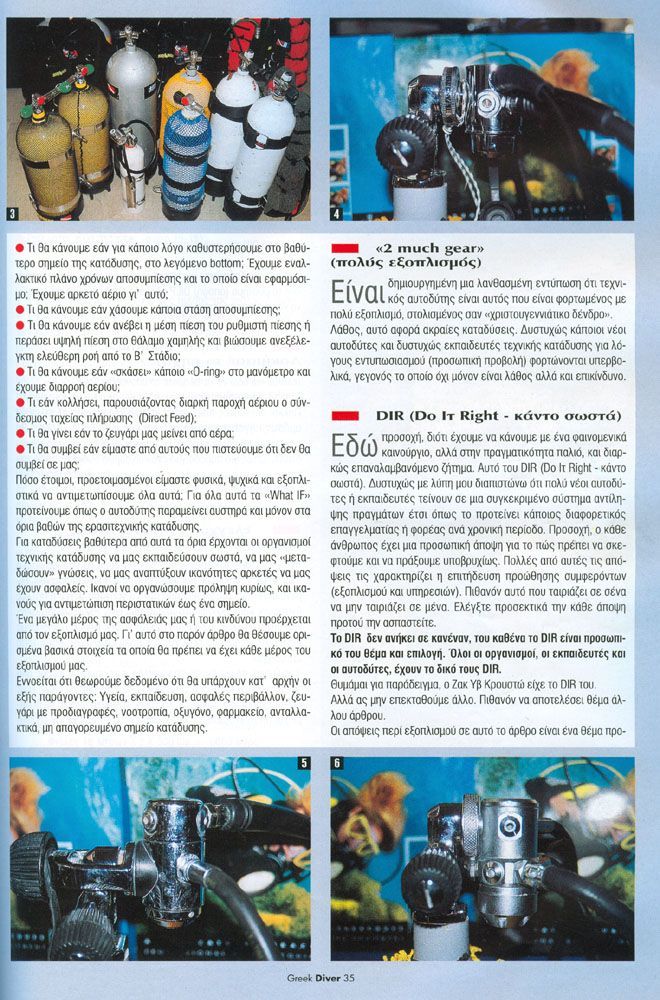
• Τι θα κάνουμε εάν για κάποιο λόγο καθυστερήσουμε στο βαθύτερο σημείο της κατάδυσης, στο λεγόμενο bottom? Έχουμε επάρκεια αερίου?
• What will we do if for some reason we are delayed at the deepest point of the dive, the so-called bottom? Do we have an alternative decompression time plan that is workable? Do we have enough gas for it?
• Τι θα κάνουμε εάν χάσουμε κάποια στάση αποσυμπίεσης?
• We will do this if the average pressure of the pressure regulator rises, or high pressure passes into the low pressure chamber and we experience uncontrolled free flow from the Second Stage.
• What should we do if an "O-ring" on the pressure gauge "bursts" and we have a gas leak?
• What if the direct feed connector gets stuck, providing a constant flow of gas?
• What will happen if our couple runs out of steam?
• Τι θα συμβεί εάν είμαστε από αυτούς που πιστεύουμε ότι δεν θα συμβεί σε μας?
Πόσο έτοιμοι, προετοιμασμένοι είμαστε φυσικά, ψυχικά και εξοπλιστικά να αντιμετωπίσουμε όλα αυτά? Για όλα αυτά τα "What IF" προτείνουμε όπως ο αυτοδύτης παραμείνει αυστηρά και μόνον στα όρια βαθών της ερασιτεχνικής κατάδυσης.
Για καταδύσεις βαθύτερα από αυτά τα όρια έρχονται οι οργανισμοί Τεχνικής κατάδυσης να μας εκπαιδεύσουν σωστά, να μας "μεταδώσουν" γνώσεις, να μας αναπτύξουν ικανότητες αρκετές να μας έχουν ασφαλείς. Ικανοί να οργανώσουμε πρόληψη κυρίως, και ικανούς για αντιμετώπιση περιστατικών έως ένα σημείο.
A large part of our safety or risk comes from our equipment. For this reason, in this article we will set out some basic elements that each piece of our equipment should have.
It goes without saying that we take for granted that the following factors will exist in principle: Health, Education, safe environment, Couple with specifications, mentality, oxygen pharmacy, Spare parts, non-prohibited diving spot.
"2 much gear" (πολύς εξοπλισμός)
There is a misconception that a technical diver is someone who is loaded with a lot of equipment, decorated like a "Christmas tree". Wrong, this concerns extreme diving. Unfortunately, some new divers and unfortunately technical diving instructors, for reasons of impressionability (personal projection), overload themselves, which is not only wrong but also dangerous.
DIR (Do It Right)
Be careful here, because we are dealing with a seemingly new, but in reality old, and constantly recurring issue. That of DIR (Do It Right). Unfortunately, I regret to note that very young scuba divers or instructors tend to a specific system of perception of things as proposed by a different professional or organization per period of time. Be careful, each person has a personal opinion on how we should think, act underwater. Many of these opinions are characterized by the sophistication of promoting interests (equipment and services). Perhaps what suits you does not suit me. Check each opinion carefully before you embrace it.
DIR DOES NOT BELONG TO ANYONE, EACH PERSON'S DIR IS A PERSONAL MATTER AND CHOICE. ALL ORGANIZATIONS, INSTRUCTORS, AND DIVERS HAVE THEIR OWN DIR.
I remember, for example, Jacques-Yves Crousteau had his DIR.
But let's not expand on this any further. It will probably be the subject of another article.
The opinions on equipment in this article are a matter of personal DIR of the writer and which vary under circumstances. So here we will look from one perspective, and under some circumstances, at the DILP system (opinion), i.e. Do It Like Petrou!!!! (I hope you understand the implication).
TIS (Try It Shallow)
(I hope you understand the implication here too)
Κάτι το οποίο παρατηρώ τελευταία και οφείλω να επισημάνω. Πολλοί αυτοδύτες παίρνοντας κάποιο νέο κομμάτι εξοπλισμού αμέσως πηγαίνουν και καταδύονται με αυτό βαθιά. Λάθος. Θα πάτε ρηχά να το γνωρίσετε, να παίξετε μαζί του και προσαρμοστείτε. Όπως για παράδειγμα ένα καινούργιο Ρυθμιστή πλευστότητας, μία στεγανή στολή, ένα υπολογιστή κατάδυσης (Dive Computer) κλπ.
Equipment tightness & gas loss testing
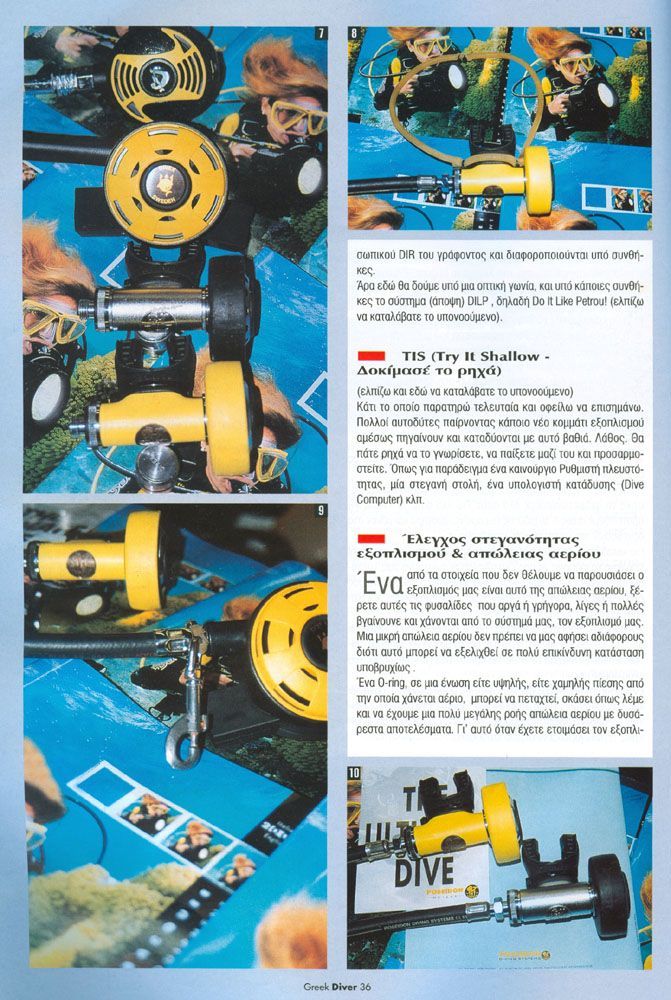
One of the elements that we do not want our equipment to present is that of gas loss, you know those bubbles that sooner or later, few or many come out and are lost from our system, our equipment. A small loss of gas should not leave us indifferent because this can develop into a very dangerous situation underwater. An O-ring, in a connection of either high or low pressure from which gas is lost, can be thrown, burst as we say and we have a very large flow loss of gas with unpleasant results. That is why when you have prepared your equipment, do not trust your ear that it does not leak. Place your equipment under pressure in water and then you will really see if there is a loss or not. If there is, fix it in there.
The points that we must pay particular attention to are:
• Ενώσεις σωλήνων υψηλής και χαμηλής πίεσης με τις εξόδους του Ά σταδίου ρυθμιστή πίεσης
• Second stage pressure regulators
• Quick-connect (Direct Feed) in its connection to the buoyancy regulator or to the tank filling valve.
• First stage connection with the bottle cap
• Ένωση κλείστρου φιάλης με φιάλη!!!
• Buoyancy Regulator
Bottles
The choice of the size and pressure of the bottle or bottles has to do with the known consumption calculation data, depth, times (dwell and decompression), consumption rate, etc.
And of course, as we understand, the issue of cylinders is now important since we must have a reasonable gas sufficiency, reserves, gas, thinking proactively about covering an emergency situation. Will we get 1 cylinder? What will it be? 15 or 18 liters or is it better for us to get 2 cylinders of 10 or 12 liters? At what pressure? What advantages or disadvantages do they have? At what pressure, 200 or 300 bar?.
Let's look at some basic comparisons between cylinder volumes and pressures. Of course, in no case can we consider a 15 liter cylinder sufficient.
Bottle
18 λίτρων Χ 220 bar = 3960 λίτρα
• Single cylinder, which leads us to use a pressure regulator system, or if it has a 2-outlet valve, two pressure regulator systems.
• Less gas quantity compared to those of 2 X 10 X 300 Bar pressure and 2 X 12 X 220 bar pressure, 2 X 10 X 220 bar pressure.
• Large volume for a single bottle.
• Παραμένει πάντα μια πηγή αερίου.
• Η σύνδεση με το κλείστρο της φιάλης μπορεί να είναι είτε τύπου International είτε τύπου DIN.
• Regulator and other instruments are standard for 220 bar.
• Easily attaches to the buoyancy regulator with a strap.
10 liter bottles X 2 X 300 bar = 6000 liters
• Larger gas quantity compared to that of 18 X 220 Bar and that of 12 X 2 X 220 bar
• Smaller cylinder volume compared to that of 12 X 2 X 220 bar pressure
• Greater pressure on the O-rings of the pipe joints
• The connection to the cylinder cap (implied to be 300 bar) must necessarily be of the DIN 300 bar type.
• Regulator and other instruments must be 300 bar.
• Straps or metal hoops are required to support the buoyancy regulator
• The buoyancy regulator must have a high lifting capacity. 20 liters or more is recommended.
• Μπορεί να χρειαστούμε να ενώσουμε τα κλείστρα των δύο φιαλών με σωλήνα (ώστε να υπάρχει επικοινωνία αερίου και να μην χρειάζεται να γίνεται διαχείριση κατά την διάρκεια της κατάδυσης) και να τοποθετήσουμε, ή όχι , βαλβίδα απομόνωσης φιαλών.
• More difficult to find on the market
• Ακριβότερη τιμή και βάρος από τις άλλες επιλογές, αν και τελευταία έχουμε θετικές εξελίξεις και στα δύο αυτά θέματα
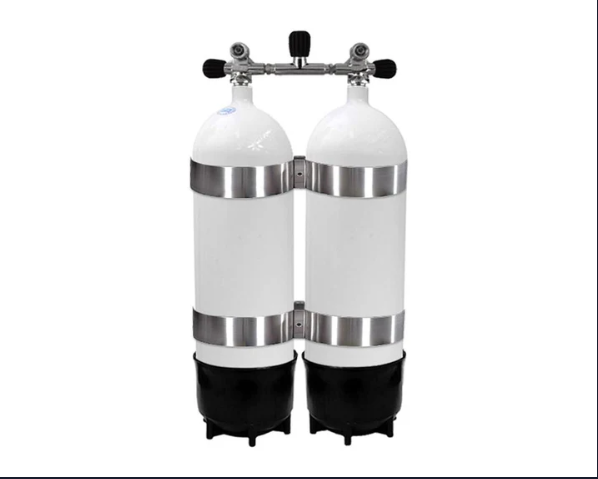
10 x 2 x 220 bar cylinders = 4400 liters or 12 liters x 2 x 220 bar = 5280 liters
• Larger amount of gas compared to that of 18 X 220 Bar and smaller than that of 2 X 10 X 300 Bar
• Larger volume compared to other bottles, the 12 liter bottles, the volume of 2 X 10 X 200 bar is quite convenient.
• Regulator and other instruments to be 220 bar
• Proven and flexible system with sufficient gas reserves for a fairly wide range of diving limits.
• The 10 X 2 X 220 bar cylinders are a large gas quantity, with air source redundancy & low weight.
• Straps or metal hoops are required to support the buoyancy regulator
• The buoyancy regulator must have a high lifting capacity. 20 liters or more is recommended.
• Μπορεί να χρειαστούμε να ενώσουμε τα κλείστρα των δύο φιαλών με σωλήνα (ώστε να υπάρχει επικοινωνία αερίου και να μην χρειάζεται να γίνεται διαχείριση κατά την διάρκεια της κατάδυσης) και να τοποθετήσουμε, ή όχι , βαλβίδα απομόνωσης φιαλών.
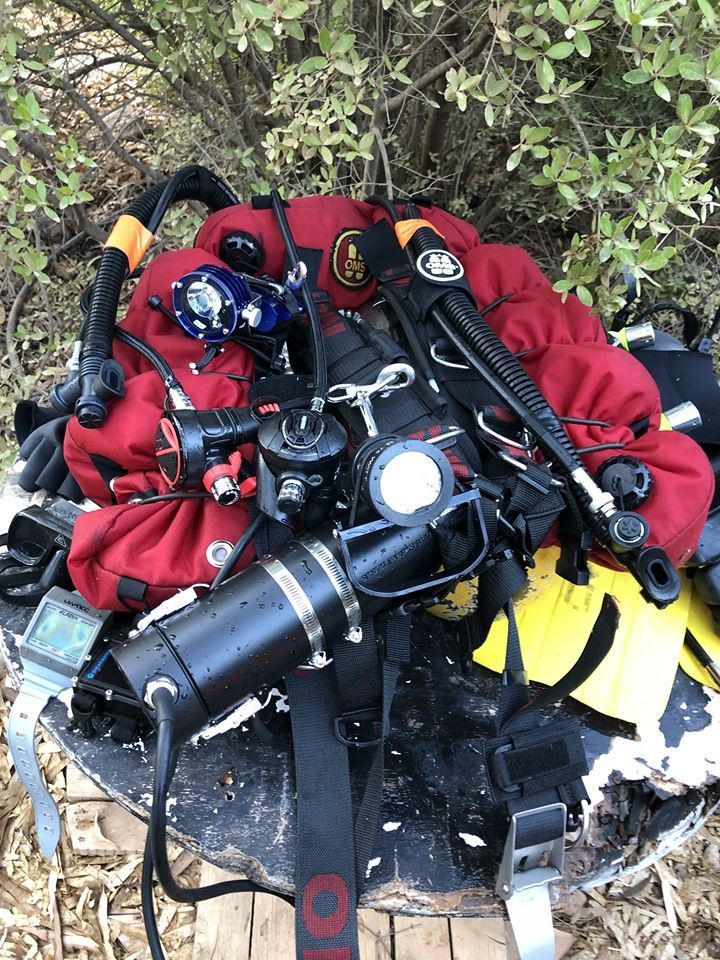
Caution: double tanks require ergonomic equipment placement because with 2 pressure regulator systems we acquire a lot of equipment on us, which in itself can create functional problems for the technical scuba diver.
There are opinions here, how many instruments will we have on top?
Scenario 1:
We take an 18 liter tank behind us and an additional tank hooked in front. If the additional tank has the same mixture as the bottom mixture then we have gas adequacy but it is a wrong choice because if it is air or Trimix it is not a proper decompression gas. If the additional tank has an air mixture enriched with Oxygen i.e. Enriched Air Nitrox then yes we have a proper decompression mixture but now we only have one air source (the 18 liter tank) for the deepest part of the dive. It is an option that is not preferred by technical scuba divers. It can be used for diving at depths of 40 to 45 meters with a short dwell time.
Σενάριο 2ο :
For diving at depths of 45 to 60 meters, 2 cylinders with bottom mix are preferred (volume and pressure are a matter of personal choice after evaluating dive data), Trimix is the safest choice in terms of gas, and Enriched Air with Oxygen (ENANitrox) for decompression.
Bottom Mixture Pressure Regulator
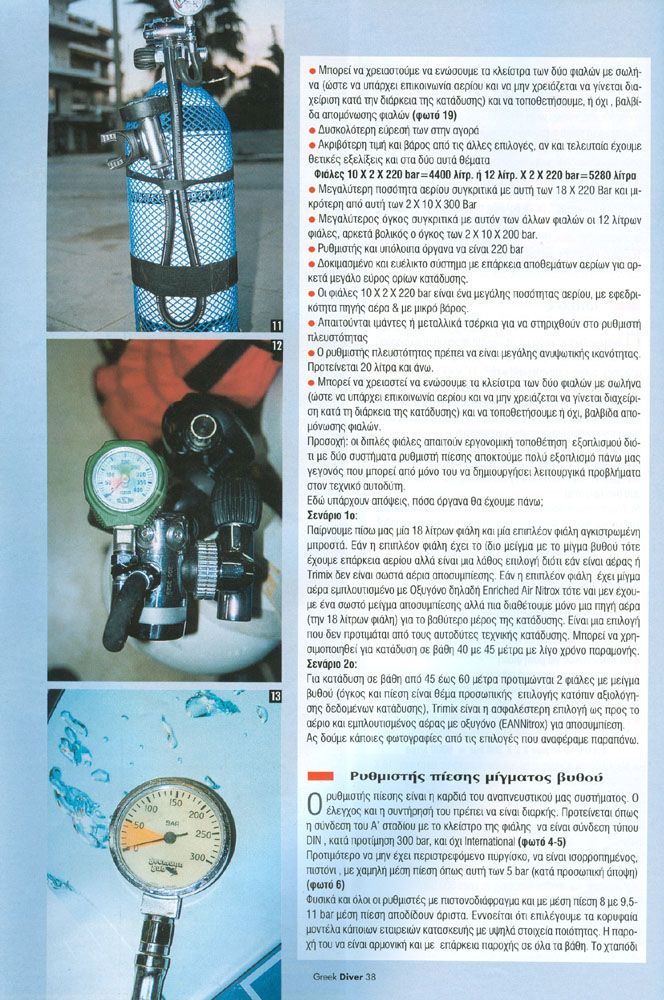
The pressure regulator is the heart of our respiratory system. Its control and maintenance must be continuous. It is recommended that the connection of the first stage to the cylinder valve be a DIN type connection, preferably 300 bar, and not International.
It is preferable that it does not have a rotating turret, that it be balanced, piston, with a low average pressure such as 5 bar (in my personal opinion).
Of course, all regulators with a piston diaphragm & with an average pressure of 8 to 9.5-11 bar average pressure perform excellently. It goes without saying that we choose the top models of some manufacturing companies with high quality elements. Its supply should be harmonious and with sufficient supply at all depths. The octopus should be long so that it can be given comfortably to our partner or taken by us. The spare second stage should be clearly visible.
The long octopus tube (from 1 to 2 meters) should be placed in the equipment so that it does not fly and is easy to remove for use. In case of emergency and when using it, we are not interested in placing it in its place underwater at that moment because in principle it will not be so easy but also because being in the open sea it is difficult for it to get tangled somewhere. It goes without saying that we either use it until the surface (where we put it in its place) or until we reach an alternative air source (where we place it somewhere rough so that it does not bother us). I personally am used to using my octopus with an exit on the left because this way it is more ergonomically placed, and easier to use with (our cooperation) my partner.
The second stage can be either the classic shape but with a large internal space, with a lever and without a direct spring system. It can also be a side air exhaust valve. This has the great advantage that it can come from both our left and our right equally easily. The second stage must be light.
The second stage must be attached or anchored in a place where the diver has immediate and easy access to it. It can be supported (in addition to the classic accessories) either with a clip or with surgical rubber.
The second stage should have long "whiskers", as they are called, so that we are not bothered by bubbles, as well as 2 exhaust valves-membranes because they release the air and return to a tight position faster. Choose the mouthpiece that suits you, of course by experiencing it under various conditions such as for a long period of time, e.g. in a decompression stop.
The placement of the first stage must be such that the tubes do not "fly" but go downwards, close to the equipment and fit comfortably in the mouth.
Attention: The pressure regulator (A' & B' stage and B' octopus stage) whether it is for the bottom mixture or for the decompression mixture must be the best available on the diving market. If we have double tanks we can have on them:
• From a first & second stage, in each bottle
• One of the two second stages should be long. If we put two second stages and a long octopus then we start to have a lot of tubes on us.
We should have one pressure gauge (and not a whole instrument console) on each tank, whether they are separate or connected. Some technical divers in connected tank systems use only one pressure gauge with the reasoning: a) less equipment b) if any gas shortage, gas loss or malfunction was observed then they would start an ascent anyway.
• Have a quick-connect hose that does not protrude
Hook Bottle
The anchor cylinder can be placed in front, cross or side and usually contains decompression gas. The choice of this cylinder is made by assessing the adequacy of the gas reserves that we must have according to the data of the decompression time that we must carry out. Avoid excesses in everything, but make sure that you have covered some possible negative cases.
Αλουμινίου ή φιάλη σιδήρου είναι δική σας επιλογή. Θα μπορούσα να απαριθμήσω πάρα πολλούς λόγους για τους οποίους θα διάλεγα την μία ή την άλλη φιάλη αλλά δεν είναι του παρόντος άρθρου.
But since you insist without elaborating... I'll tell you that I prefer iron bottles because:
• I consider steel to be a more reliable metal in terms of durability.
• Its buoyancy does not change as pressure decreases like aluminum
• Έχει βάρος το οποίο εγώ χρειάζομαι να έχω πάνω μου καθώς θέλω να αποσυμφορήσω την μέση μου από τα πολλά βάρη
• It is a smaller volume bottle than the Aluminum one compared to the same amount of air
Can I find an aluminum cylinder to use that fills with 250 - 300 bar of pressure, doesn't have a large volume, and doesn't change its buoyancy as it empties?
But let's get to our topic...
• Προσδιορίζουμε την ποσότητα του αερίου (και το μείγμα) που επιθυμούμε
• We choose the volume (and metal) and pressure of the bottle.
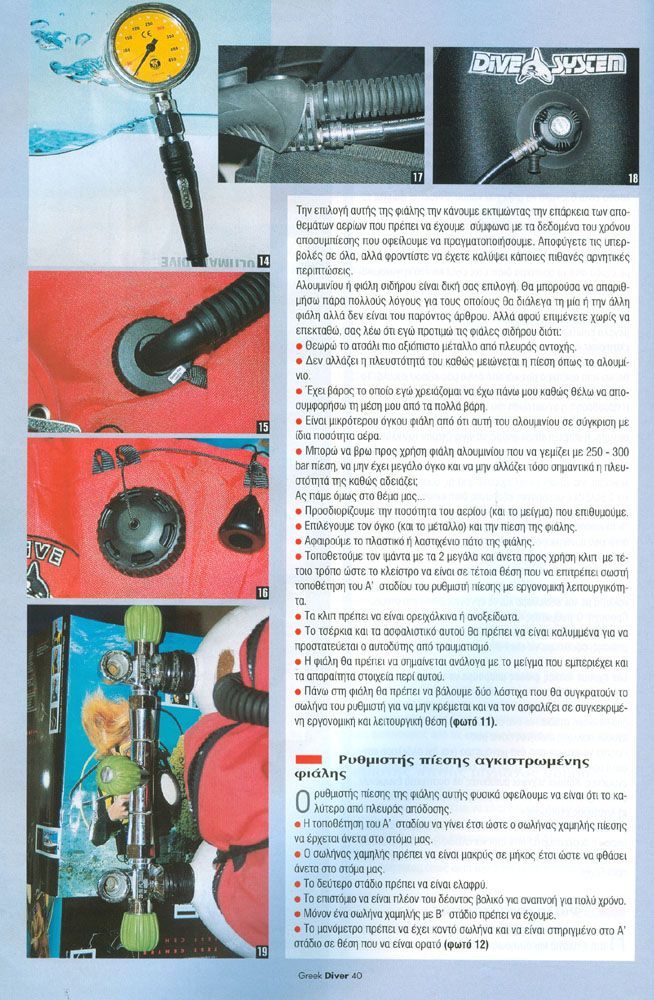
• Αφαιρούμε το πλαστικό ή λαστιχένιο πάτο της φιάλης
• We position the strap with the 2 large and easy-to-use clips in such a way that the closure is in a position that allows correct placement of the 1st stage of the pressure regulator with ergonomic functionality.
• Clips must be brass or stainless steel.
• The harness and its safety devices should be covered to protect the diver from injury.
• The bottle should be labeled according to the mixture it contains and the necessary information about it.
• On the bottle, we should place two rubber bands that will hold the regulator tube so that it does not hang and secure it in a specific ergonomic and functional position.
Hooked cylinder pressure regulator
The pressure regulator of this bottle must of course be the best in terms of performance.
• The placement of the first stage should be done so that the low-pressure tube fits comfortably in our mouth.
• The low-pressure tube must be long enough to comfortably reach our mouth.
• The second stage should be light.
• The mouthpiece should be comfortable enough for breathing for a long time.
• We should only have one low-pressure tube with a second stage.
• The pressure gauge must have a short tube and be supported on the A' stage in a visible position.
• If we are diving with a drysuit, it is a very good idea to have a quick-fill hose as a backup in case anything happens to the main Quick-Connect hose.
• On the second stage we can have a clip so that we can secure it at some point.
• Ο σωλήνας ασφαλίζεται στα λάστιχα που έχουμε βάλει στην φιάλη.
• Ο ρυθμιστής θα πρέπει να σημαίνεται ανάλογα με το μείγμα που εμπεριέχει και το MOD αυτού.
• A rotating first stage turret is very convenient for comfortable movement of our head.
Manometer
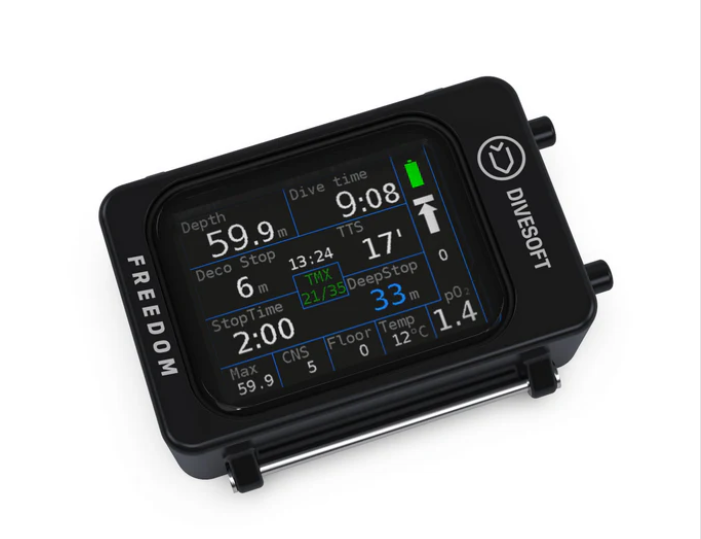
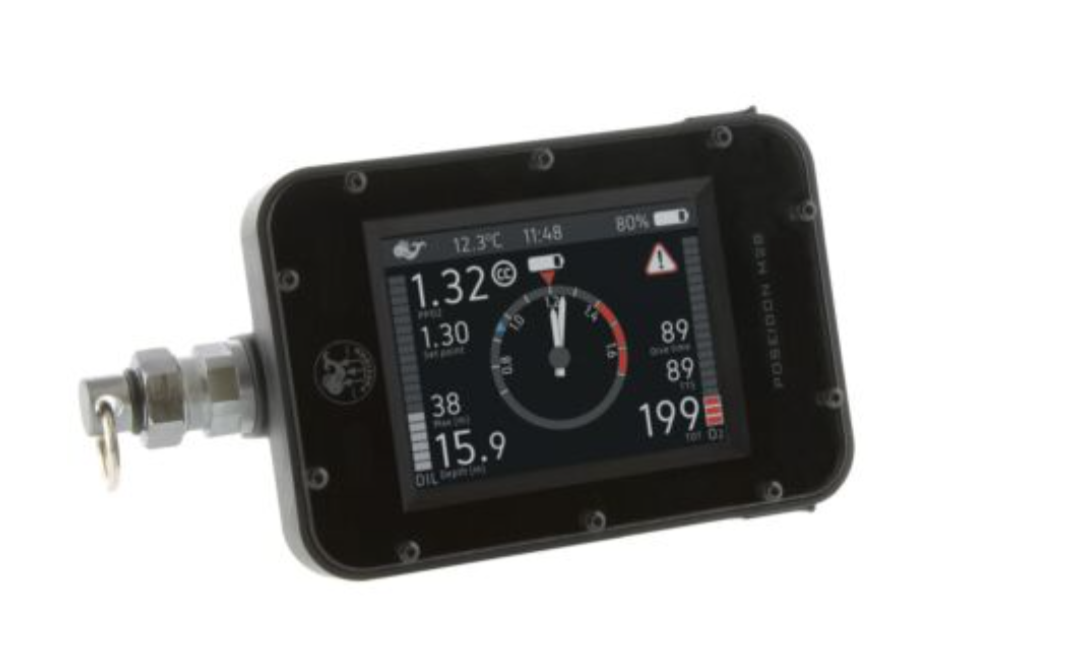
Από την στιγμή που υπάρχουν 2 βαθύμετρα, ή Dive Computer τότε μπορούμε να αποφύγουμε τις ογκώδεις κονσόλες που περιέχουν μανόμετρα, βαθύμετρα, πυξίδα, θερμόμετρα. Δεδομένου πιθανόν να έχουμε διπλό εξοπλισμό πάνω μας οφείλουμε να ελαχιστοποιήσουμε τον περιττό εξοπλισμό. Επιδιώκουμε να έχουμε ένα μανόμετρο το οποίο να είναι 300 bar ή 400 bar του ο οποίου η πλάκα να είναι ευκρινής χωρίς πολλά χρώματα και σχέδια, διότι όλα αυτά το μόνον αποτέλεσμα το οποίο έχουν βαθιά (όπου το φως είναι μειωμένο) είναι να κάνουν τις ενδείξεις λιγότερο ευκρινή.
The manometer is very convenient to have hooked at chest height (passing under our armpit) so that we can see it without looking for it and bringing it in front of our face with our hand and having a more ergonomic position.
More ergonomically helpful is the use of a Dive Computer with a transmitter that transmits the pressure.
In the next issue we will cover the basics of some of the following pieces of our equipment:
• Buoyancy regulator
• Compass
• Suits, Dry, Semi-Dry, Wet type
• Pony tank - μικρή φιάλη στεγανής στολής
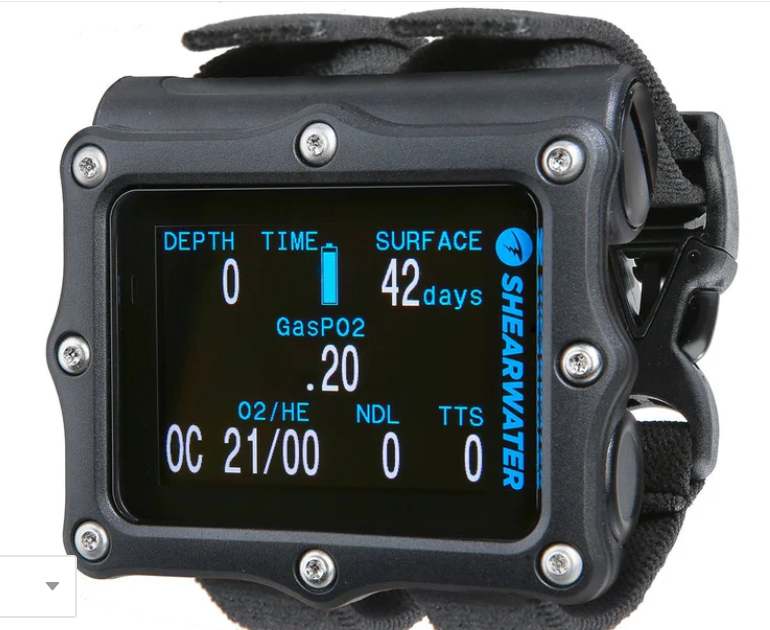
• Dive computer
• Stopwatches
• Spools
• Φώτα
• Marking and decompression balloon
• Writing pad
• Cutting tools
• Πέδιλα
• Weights
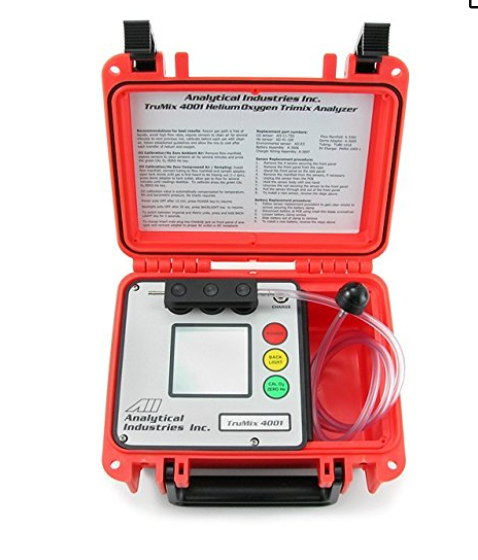
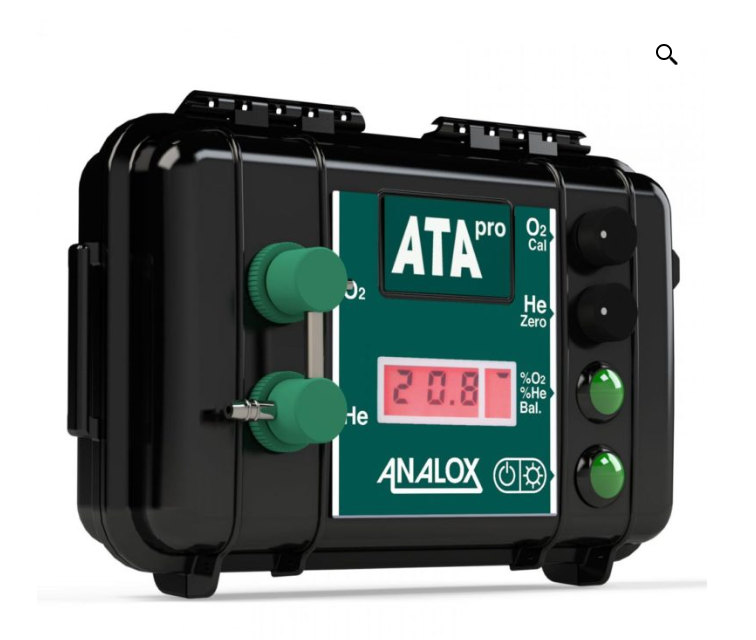
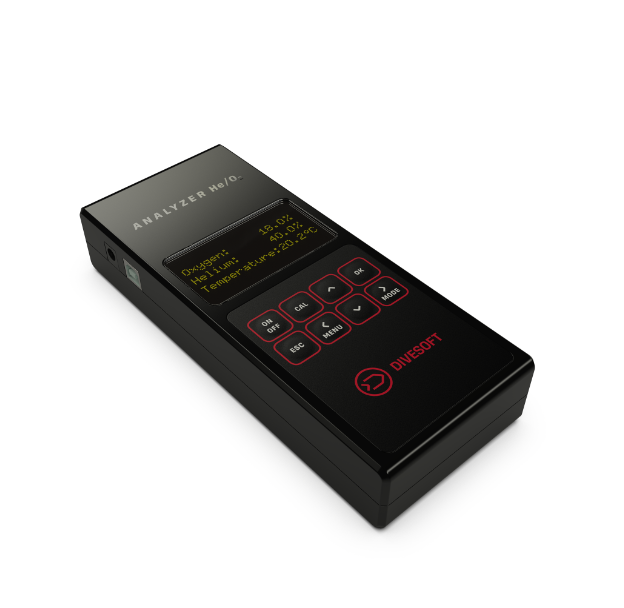
• Αναλυτές
Publications
Share this