


Σήματα Επικοινωνίας
&
Τεχνικές στη Σπηλαιοκατάδυση
βασικά στοιχεία......
Columnist: George Petrou
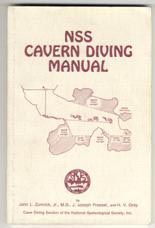
Photo: NSS Cave & Cavern Manual
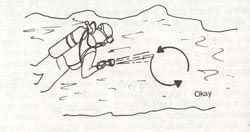
Cave diving is one of the most enjoyable forms of technical diving. But at the same time one of the most demanding and dangerous. Excellent training, adequate and correct equipment, experience, discipline and ideal mental state are key safety factors. In the context of training, a crucial link is communication between cave divers.
Let's now take a few basic elements from underwater communication.
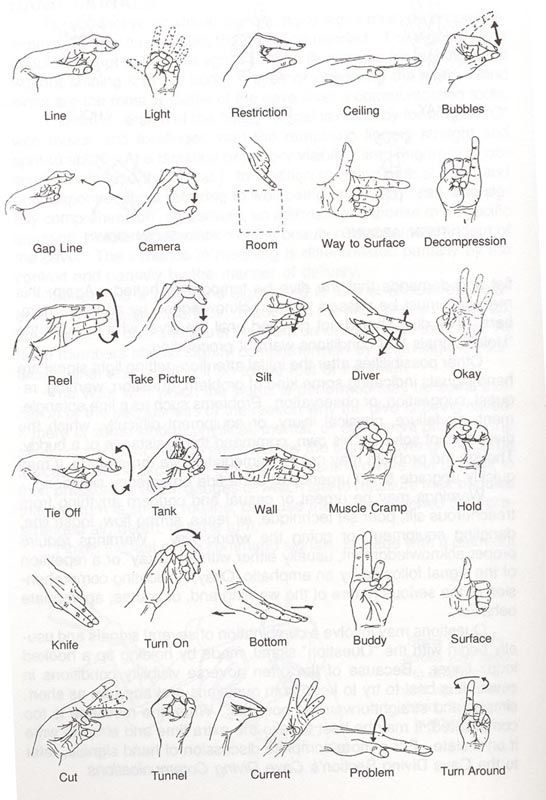
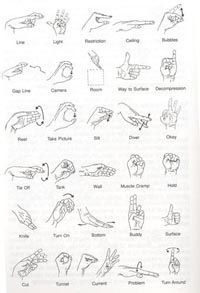
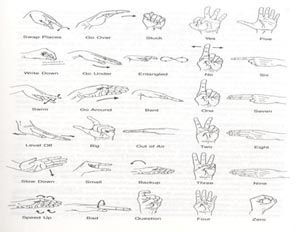
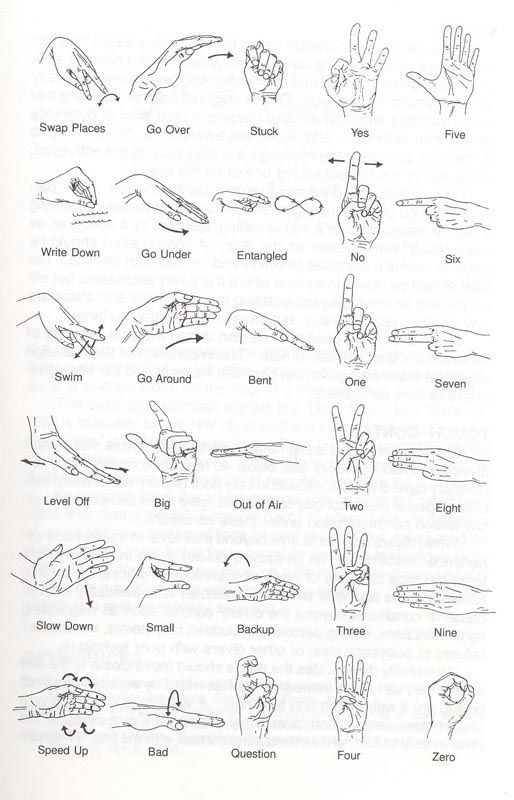
Communication in the open sea has its difficulties sometimes, in night diving things become more difficult. In caves where we have many more signals in number, correctness of choice and a clear signal are required. Let's see below several of the signals that are used in Cave Diving starting from the top left and going to the right and then to the next row from the bottom and so on:
- Να αλλάξουμε θέσεις - Πήγαινε από πάνω - Κόλλησα - Ναι, ΟΚ - 5
- Write - Go below - I'm confused - Denial, no - Six
- Swim - Go Around - Bend - One - Seven
- Stay at this depth - Large - Lack of air - Two - Eight
- Slow down - small - backup, cover - Three - Nine
- Επιτάχυνε - Πρόβλημα, άσχημα - Ερώτηση - Τέσσερα - Μηδέν
Παρακάτω μπορούμε να δούμε μερικά ακόμη:
- Mitos - light, flashlight, turn on - restriction - ceiling - bubbles
- Passed over Mito - Camera (I don't think you don't know what that means), "shoot" Video - room, space - path to the surface - Decompression
- Reel - take photo - sediment - Cave diver (scuba diver) - OK
- Tie - Bottle - Wall - Muscle cramp - hold on
- Knife - turn on, open, activate - bottom - couple - surface, let's go up
- Cut - Siphon, narrow passage - Current - Problem, turn around, around
Be careful, we shine light on our hand that makes the signal and not on our partner's eyes because not only will they not see anything but they will also be distorted. I'm sure you liked them
LIGHTING SYSTEMS
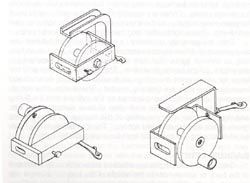
Είναι εύκολα κατανοητό ότι ο Σπηλαιοδύτης οφείλει να έχει Υψηλής Ποιότητας και πολλά στον αριθμό φωτιστικά συστήματα. Μέχρι τώρα είχαμε τα κλασικά, στα οποία λάμπα και μπαταρία είναι μαζί και τα κρατάμε στο χέρι μας. Άβολα, βαριά και δύσχρηστα. Τώρα προτιμάμε τα νέας γενιάς, τα λεγόμενα από πολλούς "Technical" lights (φωτιστικά συστήματα) των οποίων η μπαταρία δεν είναι μαζί με την λάμπα αλλά ευρίσκεται είτε στο ρυθμιστή πλευστότητας, είτε στη φιάλη.
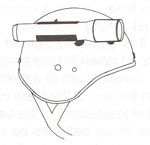
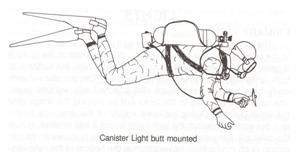
Below we can see possible locations of the battery. Another place where the cave diver must definitely have lights is in the helmet. These lenses must have sufficient lighting output. It goes without saying that the scuba diver must wear a helmet inside the cave (whether or not he is diving). It goes without saying that he should also have a smaller spare lens. The cave diver must have at least 3 different sources of light.
MITOS AND KAROULIA
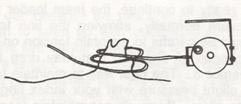
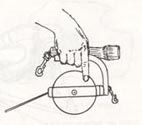
Τα σπήλαια γνωρίζουμε ότι είναι πολύ πιθανόν να είναι δαιδαλώδη, άρα η σκέψη να μην χρησιμοποιήσουμε καρούλι - μίτο είναι απαράδεκτη. Ακόμη και στην περίπτωση στην οποία τα σπήλαια είναι απλά ένας μεγάλος χώρος, χωρίς επιπλέον χώρους και δύσκολα περάσματα, τα καρούλια με μίτο είναι απαραίτητα έτσι ώστε να μπορέσουμε να επιστρέψουμε στο σημείο εξόδου με ταχύτητα και ασφάλεια. Μπορούμε πάνω στο καρούλι που αναπτύσσουμε να τοποθετήσουμε και ένα φακό έτσι ώστε να έχουμε μία εργονομική αξιοποίηση καρούλι, μίτο, φακός.
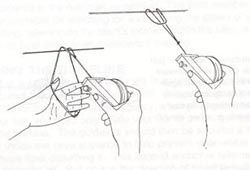
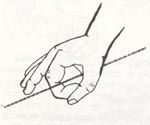
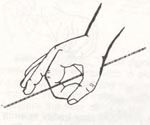
Η ανάπτυξη και το εν συνεχεία μάζεμα του Μίτου απαιτεί εκπαίδευση και εξάσκηση έτσι ώστε να γίνει η όλη η διαδικασία με ιδανικό τρόπο ώστε να μην κινδυνεύσει ο σπηλαιοδύτης από τον ίδιο τον εξοπλισμό του. Είναι σημαντικό ο αυτοδύτης που κάνει πορεία σε μίτο ήδη τοποθετημένο ή ο οποίος θα ακολουθήσει το ζευγάρι του που αναπτύσσει μίτο να μην αφήσει καθόλου το μίτο, ή εάν χρειαστεί να το κάνει με κατάλληλη τεχνική και διαδικασία.
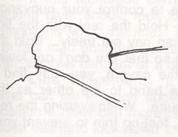
Προσέξτε πως το δάχτυλο φυλακίζει το μίτο. Όταν ο Σπηλαιοδύτης χρειαστεί να φύγει από το κεντρικό μίτο τότε μπορεί να αναπτύξει από αυτόν κάποιο άλλο μικρότερο εφεδρικό μίτο.
Προσέξτε μία από τις τεχνικές πρόσδεσης του εφεδρικού μίτου στον κύριο. Η κίνησή μας είτε αναπτύσσοντας τον μίτο είτε ακολουθώντας τον μίτο πρέπει να είναι προσεκτική έτσι ώστε να μην λύσει, ξεσύρει ή δίνοντας τάση κοπεί ο ίδιος ή κόψει ή μπλέξει τον κεντρικό μίτο.
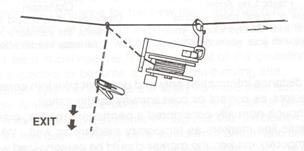
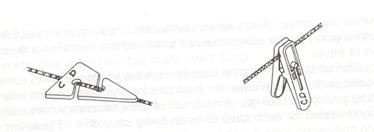
The tip should always have information on it. For example, the following.
- A triangular arrow indicating the direction to the exit.
- A tweezers - clothespin which corresponds to a cave diver who, upon entering, grabs (leaves) it on his nose, and when we make our way to the exit and encounter it in front of us, it means that someone either forgot to grab it when leaving (exiting) or is still inside the cave. Each tweezers corresponds to a scuba diver. Small useful accessories.
- Notice in the photo below how the tip is secured to the central tip, and how the tweezers have been inserted towards the exit point.
- Το πώς θα περάσει από ένα σημείο ο μίτος μας, το πώς θα επιλέξουμε το σημείο πολύ σημαντικό. Το πώς θα δέσουμε σε ένα σημείο το μίτο μας, το πώς θα επιλέξουμε το σημείο πολύ σημαντικό.
- The knot should not be loose but not under tension either. Tying our knot in too many places is not safe. Think of the time we will lose on the way back to untie it, to gather it.
MITOS AND KAROULIA
Το που θα δέσεις το μίτο και να κάνεις μια σωστή, ασφαλή πορεία είναι υψίστης σημασίας και γι΄αυτό δεν φθάνει μόνο η εκπαίδευση αλλά απαιτείται:
- practice many dives with increasing penetration length
- practicing many dives with increasing difficulty
- practice so that you can gain situational awareness and sound judgment
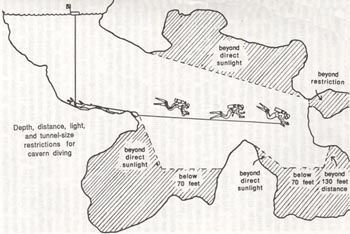
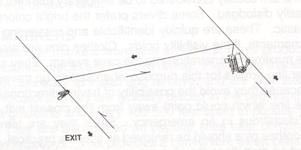
Below in the plan it is worth noting the following:
- The team initially dives vertically, ties the knot, and penetrates to the point where it has constant visual contact with light, thus making a dive into an environment we call a Cavern.
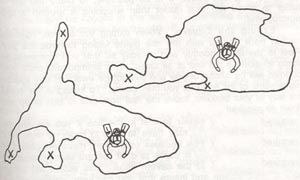
- Moves to the center of the space away from closed, dark areas where he may lose direct visual contact with the exit light.
- It moves to the center of the space, away from the walls where it can cause turbulence with a high probability of creating sediment.
- It moves to the center of the space away from closed, dark places where someone could become trapped.
- The team should have many dives together since they must have a common situational assessment, communicate easily with each other, and know at all times what they need to do.
- The group should not be large but as small as possible. Think of a group of 5 cave divers who, on their way back, get trapped in the cave due to a wrong choice or an incident by the first one.
- Το Solo Diving, ή αλλιώς η αυτόνομη κατάδυση βρίσκει την απόλυτη εφαρμογή πολλές στην Σπηλαιοκατάδυση. Πάρα πολλές φορές το ζευγάρι μπορεί να είναι πιο πολύ πρόβλημα παρά όφελος.
Pay attention to the figure below to the points where a cave diver chooses to move. With an X we mark the points where he should not move.
BUOYANCY & PROPULSION TECHNIQUES
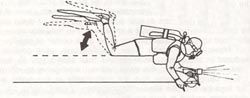
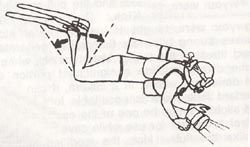
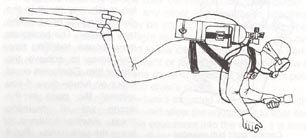
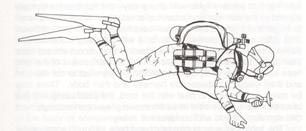
One of the skills that a cave diver must undoubtedly have developed to a high level is that of excellent buoyancy, that is, control of his underwater movement. His movements must be calm, with an excellent hydrodynamic body position with the body and legs away from the mouth and from the walls of the cave. Do not forget that in a cave where there is no current, the sediment will settle in at least 24 hours.
Χαρακτηριστική είναι η εμπειρία, η δική μου και των άλλων δύο μελών της ομάδας μου σε ένα σπήλαιο στο οποίο ενώ κινηθήκαμε άριστα διεισδύοντας μέσα σε αυτό έφθαναν μόνον και μόνον οι φυσαλίδες μας να κατεβάσουν υλικό από την οροφή και να δημιουργηθεί ένα απίστευτα αδιαπέραστο, για τους φακούς μας, τοίχος από ίζημα.
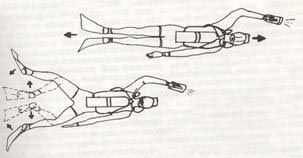
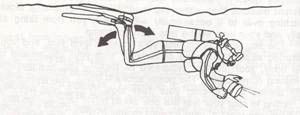
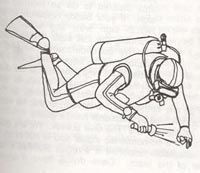
Υπάρχουν διάφορα στυλ υποβρύχιας κολύμβησης όπως το Flutter Kick, Frog Kick κλπ μερικά από τα οποία βλέπουμε παρακάτω.
COUPLE, OCTOPUS AND A WALK TO MITO
Χμ, το θέμα αυτό είναι αρκετά ευαίσθητο, απαιτεί τουλάχιστον...εκπαίδευση, πρόβλεψη, εξοπλισμό, συνεργασία, ψυχραιμία.
Ας θυμηθούμε 4 χαρακτηριστικά αποσπάσματα από σημεία που αναφέραμε παραπάνω:
1. "Χαρακτηριστική είναι η εμπειρία, η δική μου και των άλλων δύο μελών της ομάδας μου σε ένα σπήλαιο στο οποίο ενώ κινηθήκαμε άριστα διεισδύοντας μέσα σε αυτό έφθαναν μόνον και μόνον οι φυσαλίδες μας να κατεβάσουν υλικό από την οροφή και να δημιουργηθεί ένα απίστευτα αδιαπέραστο, για τους φακούς μας, τοίχος από ίζημα."
2. "Η ομάδα θα πρέπει να έχει πολλές καταδύσεις μαζί δεδομένου ότι πρέπει να έχει κοινή
εκτίμηση καταστάσεων, να επικοινωνεί εύκολα ο ένας με τον άλλο, και να γνωρίζουν
ανά πάσα στιγμή τι πρέπει να κάνουν."
3. "We may have to support our couple's problem on our way back to the surface."
4. "We may need to be supported by our partner on our return due to the fact that we are facing some problem until we reach the surface."
What will happen if... if... if...
Are we or our couple left out of the air?
An unpleasant situation but not unmanageable. It requires what we mentioned at the beginning of this chapter, on which it is good to make a comment.
- Education In such an incident the quality of our education will play an important role. Carrying out exercises with situations related to this problem is essential. Those who have obtained their degrees "without work" or "just like that", or without spending frequent diving time with the aim of learning through practice as you understand will find themselves in a very unpleasant position. They and their couple...
- Forecasting Gas adequacy is a matter of utmost importance. We must always, at all times, have enough gas in our tanks so that if our partner runs out of air, we are able to support them until the cave exit and leave some remaining air when we surface. The same applies to our partner against us.
- Equipment This is exactly the case where we utilize our long 2-3 meter octopus and understand its value. The long octopus allows us to move comfortably one behind the other. Caution: Dealing with such a situation without a long octopus, or even an octopus and engaging in companion breathing is most likely to lead to a very dangerous incident.
- Cooperation The quality of the caver's training combined with his experience and how well they know each other will result in a safe cooperation or a situation that will lead to negative extreme situations. Everyone must know in advance what they should do in each possible situation.
- Coolness This is a matter of training, experience, personal characteristics and of course the moment. The cooler we are, the faster, calmer and simpler we are to provide or suggest the solution, the more painlessly the problem will pass.
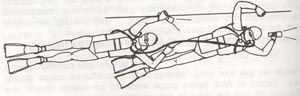
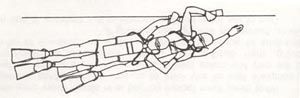
Note the following in the figure below:
- The Cave Diver (victim) has taken his partner's octopus and moves without obstructing its movements (paddles).
- The Cave Diver (victim) is in constant contact with his partner.
- Neither of them has let go of the mitten from their fingers.
- This walk with the couple next to each other requires that there is enough space for them to move.
- Εάν αναγκαστικά δεν υπάρχει πολύ χώρος κίνησης και το χταπόδι είναι κοντό σε μήκος (σαν αυτά στην κατάδυση ανοιχτής θάλασσας) τότε θα πρέπει να βρούμε την πλέον ιδανική θέση και κινηθούμε με την λιγότερη παρενόχληση του άλλου.
- During such a journey, as we said above, we are in contact with our partner, which means that we can communicate with them through a system of touch and pressure.
DIVE PLANNING
This is one of the most important but also sensitive issues of a dive. We will not expand on this because it is a matter of an organized school and requires comprehensive knowledge. It is simply worth asking one question, one problem out of the many that can occur:
Κάνω μια πορεία διείσδυση μέσα στο σπήλαιο και φθάνοντας στο τέλος αυτού έχω χρειαστεί 20 λεπτά χρόνο, με ρυθμό κατανάλωσης ...ας πούμε 15 λίτρα / λεπτό σε βάθος ...ας πούμε 10 μέτρων. Λογικά θα έχω αναπνεύσει
20 minutes x 15 liters / minute x 2 ATA (depth 10 meters) = 600 liters of air
Logically, on the return trip I will breathe (given that the same conditions will apply) another 600 liters. And let's leave a reserve, for safety, another 600 liters of air. Total necessary gas 600 600 600= 1800 liters, so we need, let's say, a 1800 / 220 bar cylinder pressure our cylinder = 8.18 bar/liter, so an 8-10 liter cylinder is enough for us. (Forget it, we never cave dive with just one cylinder). Everything seems ideal. But it is not only ideal because: 1. It is very possible that on the return trip the cave diver will have increased consumption due to fatigue or a slight feeling of cold. 2. It is very likely that upon return the Cave Diver will have increased consumption because sediment has been created resulting in psychological stress, alertness, due to lack of visibility. 3. It is possible that due to some wear and tear on our equipment, we will have a small or large loss of gas during the return. 4. The Cave Diver may be forced to support his partner with air who suddenly informs him that he has run out of air. 5. Can all of the above happen at the same time?
Αυτές είναι ελάχιστες από τις πολλές καταστάσεις που μπορεί να μας παρουσιασθούν υποβρυχίως. Εδώ τα πράγματα όχι μόνον μπερδεύονται αλλά και γίνονται άκρως επικίνδυνα όπως θα δούμε παρακάτω. Η φιάλη των 8-10 λίτρων, ας πούμε 10 λίτρων που διάλεξε σύμφωνα με παραπάνω στοιχεία είναι εντελώς ανεπαρκής. Για να δούμε ένα απλό σκεπτικό και υπολογισμό για να δούμε πόσο αέριο θα χρειαστεί να έχει ο διασώστης αυτοδύτης ώστε να υποστηρίξει το ζευγάρι του (θύμα) και να φθάσουν στην έξοδο.
Θεωρούμαι ότι το θύμα έχει ακριβώς τις ίδιες καταναλώσεις με τον διασώστη.
Now with the presence of the incident, there is no way the consumption rate will not increase by 50%. 15 liters / minute will become 22.5, let's say 23 liters / minute.
We have and we say:
20 λεπτά χ 23 λίτρα / λεπτό χ 2 ΑΤΑ (βάθος 10 μέτρων) = 920!!! λίτρα αέρα
Διείσδυση
Return
Α Σπηλαιοδύτης (διασώστης)
600 liters
920 liters
=
1520 liters
B Cave Diver (Victim)
(δεν μας ενδιαφέρει)
920 liters
=
920 liters
Α + Β Σπηλαιοδύτες
=
2440 liters
So the conclusion is that in order for Cave Diver A (rescuer) to have enough air to support Cave Diver B (Victim), he must have at least 2440 liters with him. Which means 2440 liters / 220 bar = 11,090 liters of tank. And in this case, they will come out BORDERLY, bursting with the pressure gauge needle at 0. Practically, realistically, it will not reach them.
For this dive, Cave Divers must have with them at least 2 independent air sources, 2 10 liter tanks (2 x 10 x 220 = 4400 liters) in which they must:
- check the blood pressure monitor every 2 minutes!!!
- Change the pressure regulator, manage the gases, every 2 minutes!!!
In diving planning, we should know how to calculate according to some gas management laws, e.g. Law 1/3, 1/5, 1/10.
Things are starting to get difficult, aren't they?
Είπαμε, το κάθε τι έχει τα θετικά και τα αρνητικά του.
ΠΡΟΣΤΑΣΙΑ ΣΠΗΛΑΙΩΝ
Πρέπει κατ' αρχήν να πούμε πως για την παρουσία μας μέσα στα σπήλαια οφείλουμε να πάρουμε άδεια από την αρμόδια αρχή η οποία δεν είναι καμία άλλη και μόνον η Εφορεία Παλαιοανθρωπολογίας - Σπηλαιολογίας.
We must know that:
- Caves are a very sensitive environment
- Caves are our national heritage
- Caves are monuments of nature
- Caves are covered by archaeological law
Anyone who obtains permission and enters the caves, and given that it is most likely that they cannot always be controlled by the competent body, must protect this environment "like the apple of the eye". Any damage, movement or even worse removal (taking it with them) of part of the environment e.g. Stalagmite / Stalactite or a BC find. Ancient / animal bones is unethical and punishable by Law.
GREEK MINDSET
Here we must call a spade a spade, and without further ado, we must emphasize the following:
- If you have in mind something like what we mentioned above and it says "Any damage, movement or even worse removal (taking it with them) of part of the environment e.g. Stalagmite / Stalactite or finding e.g. Ancient / animal bones is unethical and punishable by Law" then do not deal with caves and Cave Diving
- If you knowingly commit violations while diving with air, then don't engage in Cave Diving.
- If for you, cave diving is a matter of showing off to your friends, don't get involved with it.
- If you are not determined to spend time and money to acquire the necessary equipment (we have mentioned several of them in the article) then do not get involved in cave diving.
- If you are one of those who believe "it won't happen to me" then don't get involved in cave diving.
Given that in the near future Cave Diving Schools will be held and an ever-increasing number of Cave Divers will begin to be certified, we dare to mention that if people with inadequate training or a bad mentality attempt to cave in, there is an assessment that unfortunately we will mourn many victims.
But on the other hand, of course, there are many Greek Scuba Divers with the right mentality who deserve and can become Cave Divers, enjoying this uniquely beautiful world of Caves.
Before we conclude this article, we must remind you of the following:
- Σε καμία περίπτωση αυτό το άρθρο δεν δύναται να αντικαταστήσει ολικά ή μερικά το ρόλο ενός Εγχειριδίου (manual) Σπηλαιοκατάδυσης και συγχρόνως της διδασκαλίας ενός εκπαιδευτή πιστοποιημένου για Σπηλαιοκατάδυση.
- Under no circumstances may the use of information, techniques or practices (in part or in whole) from this article be utilized by an untrained person in Cave Diving.
- Σκοπός αυτού του άρθρου δεν είναι να εμβαθύνει σε αυτό το τόσο ιδιαίτερο θέμα αλλά να δώσει πολύ βασικές πληροφορίες στο Ευρύ Κοινό.
- The purpose of this article is not to advertise, to push someone into Cave Diving, nor on the other hand to scare them, but to give them realistic information about this special form of diving.
Bibliography:
- NSS CAVERN HANDBOOK ΤΩΝ John L. Zumrick, Jr., MD, J. Joseph Prosser, and HV Grey
- NSS CAVE DIVING MANUAL του Joe Prosser and H.V. Grey
- TDI (Technical Diving International) Cavern Manual
- TDI (Technical Diving International) Introductory to Cave Manual
- TDI (Technical Diving International) Cave Diving Manual
Publications

Share this